
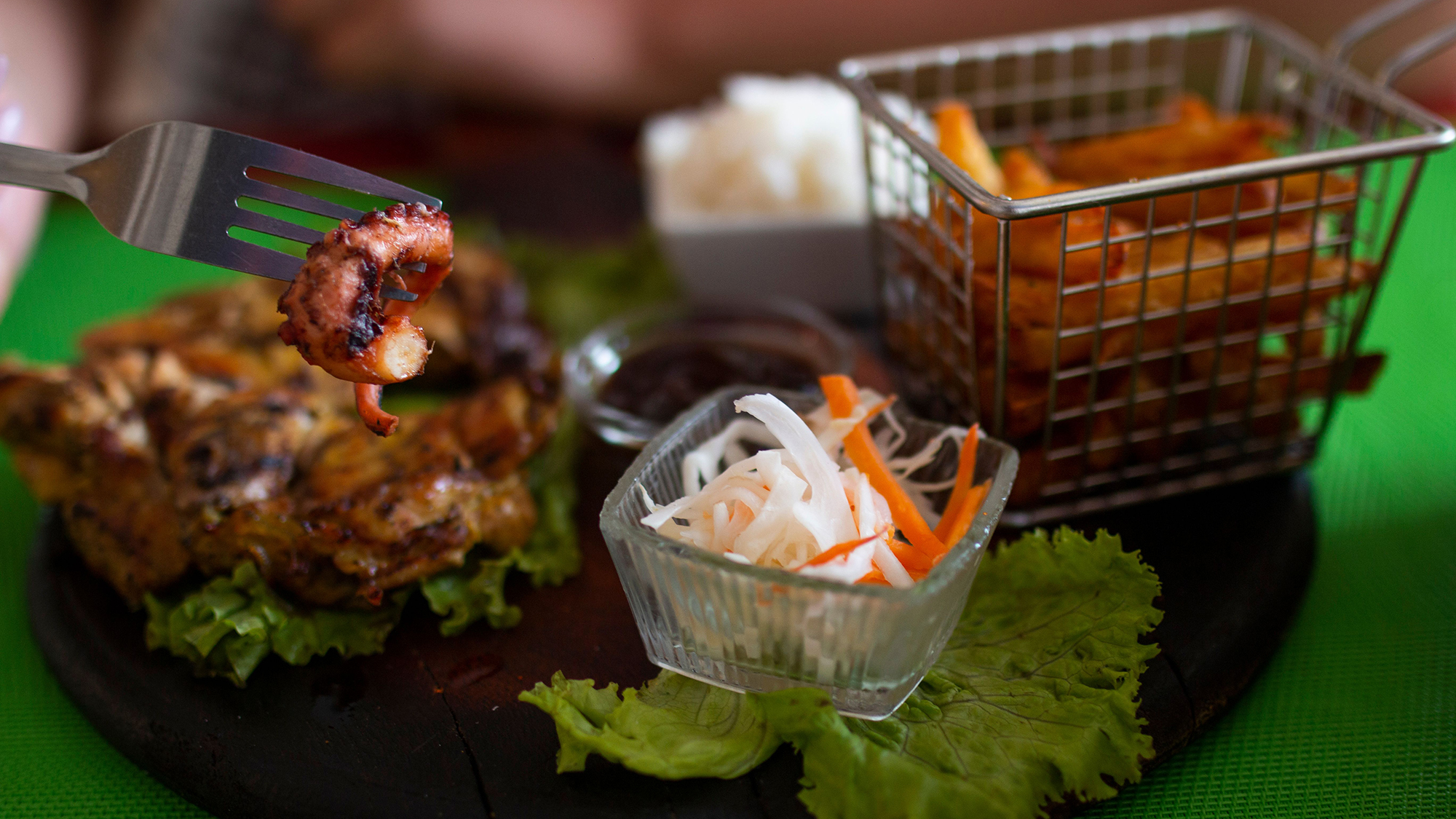
The Cuisine of Trinidad & Tobago — A Caribbean Mosaic
The Cuisine of Trinidad & Tobago — A Caribbean Mosaic
Eating in Trinidad & Tobago means stepping into a history of migration, resistance, celebration and identity. It is a cuisine that cannot be replicated; it can only be experienced.
The Indian Influence — Doubles, Roti, Curries
The Indo‑Trinidadian presence is the heartbeat of the local food culture. The most iconic dish is doubles: two soft, fried bara filled with spiced channa curry, eaten on the street early in the morning.
Roti is another pillar — dhalpuri or buss‑up‑shut, wrapped around chicken, goat or shrimp curry. Trinidadian curries are not Indian curries: they are drier, sharper, and unmistakably local.
African & Creole Heritage — Pelau, Callaloo, Stews
African and Creole traditions give the cuisine its depth and warmth.
Pelau is the national dish: rice, chicken, vegetables and coconut milk, caramelised with brown sugar before being cooked together. It is communal food — made in large pots, shared without ceremony.
Callaloo is a green, silky stew of dasheen leaves, okra, spices and coconut milk. It looks simple, but it is one of the purest expressions of Creole cooking.
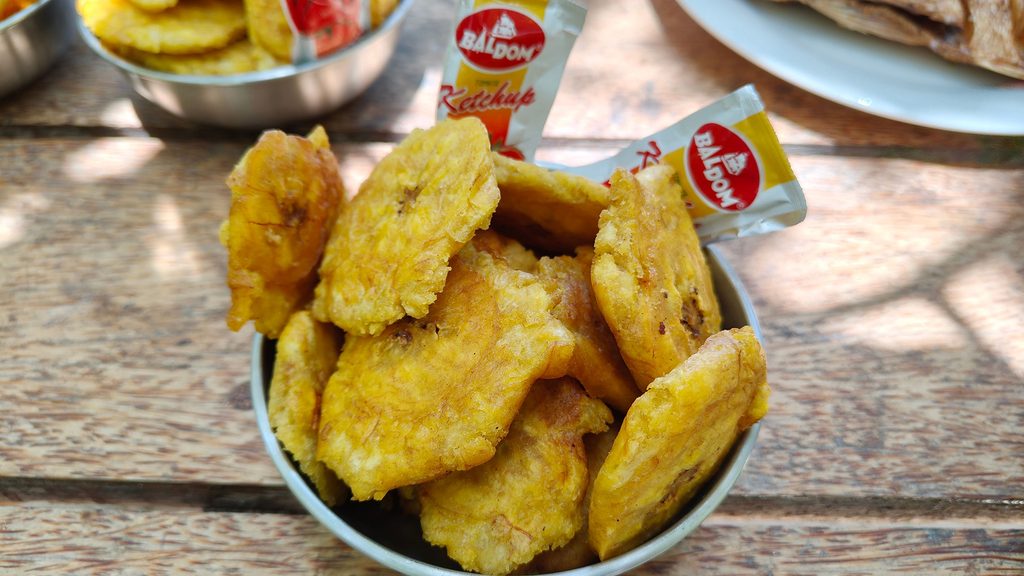
Street Food Culture — Bake & Shark, Aloo Pie, Saheena
Trinidad & Tobago has one of the most vibrant street food cultures in the Caribbean.
Bake & Shark at Maracas Beach is a ritual: fried bread, fried shark, endless condiments, lime, pineapple, shadow beni. It is not a sandwich — it is an experience.
Aloo pies are spiced potato pastries, fried and often served with channa. Saheena are fritters made from taro leaves and chickpea flour — crisp outside, soft inside.
Chinese & Levantine Echoes — Chow Mein, Gyros, Fusion Plates
Chinese communities introduced chow mein, fried rice and wonton soup — all reinterpreted with local spices. Levantine communities brought gyros, falafel and hummus, now part of the everyday food landscape.
Trinidad & Tobago doesn’t protect its cuisine from influence; it absorbs and transforms it.
Flavour Identity — Pepper, Shadow Beni, Lime
Three elements define Trinidadian flavour:
- Pepper — Scotch Bonnet, Trinidad Moruga Scorpion, pepper sauce everywhere
- Shadow beni — similar to coriander, but more intense
- Lime — not decoration, but a structural ingredient
These are the pillars of the local palate.
Desserts — Coconut, Cassava, Rum
Desserts are dense, aromatic and rooted in local produce:
- Cassava pone
- Coconut bake
- Sweetbread
- Sugar cake
Rum is not a cliché — it is part of the cultural fabric.
Why It Matters
The cuisine of Trinidad & Tobago is not just delicious. It is a living archive of the island’s history — proof that cultures can merge without losing themselves, creating something that belongs to all of them and none of them at the same time.
It is a cuisine that doesn’t try to be “authentic”. It is authentic because it is alive.